
General Data:
Number of taxa in the National Collection of Cultivated Varieties of Roses: about 1,000.
Number of taxa in the Test Garden of New Rose Varieties: variable
Area: about 1 hectare
The rose is one of the most important types of ornamental plants, important utilitarian, cultural and economic. The National Collection of Cultivated Varieties of Roses has functions at the Botanical Garden:
- Educational and didactic (a place for classes for pupils, students and trainees);
- research and scientific (research and scientific work);
- historical (species and varieties that were important in breeding are collected, as well as representatives of species and groups of roses that were cultivated in the past);
- cultural heritage (taxa of great importance for culture, history, architecture, literature, important for various fields of life, commemorate important events, people, places, varieties of Polish breeding).
The rose has accompanied man for thousands of years. Initially its fruits were a nutritious snack, and later, with the development of civilization and culture, the flowers became one of the most important ornamental plants. The origins of garden roses probably derive, like other plants, from Mesopotamia. Mentions of them are encountered in the history of Persia and Babylon, where the first rosaria were established and where they grew in the gardens of the legendary queen Semiramis. Roses were valued in Egypt, Thrace, China and Japan, as well as Greece and Rome. Rose bushes have been planted for millennia both in the gardens of monarchs and by the temples and homes of ordinary citizens of all developing cultures of Europe, Asia, North Africa. Roman conquests spread the earliest cultivated roses on the European continent. Then the roses of the East were brought with them by the Crusaders, planting them in the gardens of monasteries and their estates. On the other hand, roses from the Far East appeared in Europe with the development of colonialism, the conquest of new continents, and - the development of communications. In the eighteenth and nineteenth centuries, the development of science contributed to tremendous advances in breeding within the genus, resulting in dozens of groups and thousands of varieties. During this time, numerous gardens were established, rozaria, designed for the changing image of the Queen of Flowers.
Roses have a permanent place in literature, art, architecture, medicine, beliefs and legends. Throughout their history, depending on the times, they have been a symbol of both debauchery and the pagan world, as well as of supreme purity and Christian values. In addition to their commonly used undoubtedly valuable ornamental qualities, roses have many other practical uses. For centuries they were considered a medicinal and magical plant. Today they are important primarily as an ornamental plant, and in cities they show great ecological value.
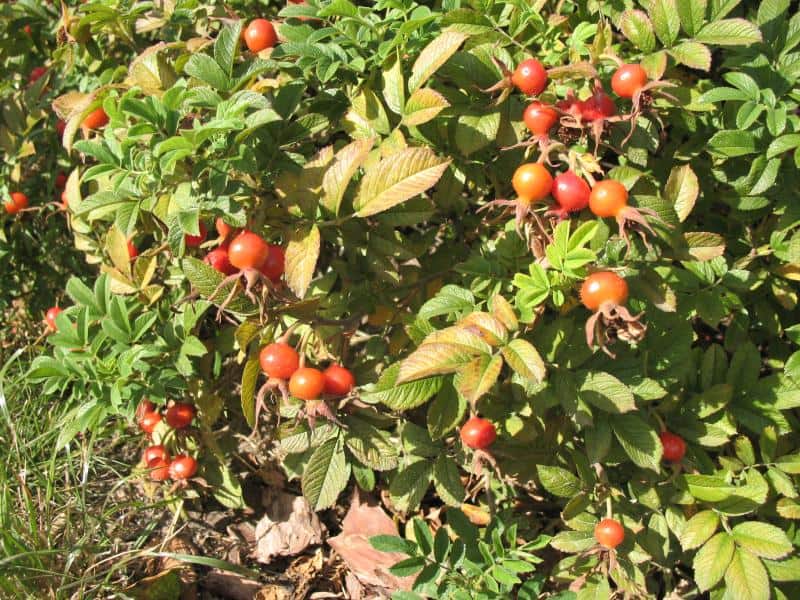
The most economically important product for millennia has been rose oil, extracted from the petals of the flowers, and used in cosmetics and perfumery, for centuries an important part of ancient world trade. In recent years, its anti-HIV, antibacterial, antioxidant, anti-diabetic, relaxing, hypnotic effects have been demonstrated. The petals of mainly damask (Rosa ×damascena) and French roses (R. gallica) were and are used for the production of rose oil. Hypanthus, a pseudo-fruit, is a rich source primarily of vitamin C (300-4000 mg / 100 g fresh weight), as well as many other valuable vitamins: K, B1, B2, B12, P, PP, provitamin A, flavonoids, sugars (glucose, fructose, sucrose), organic acids (citric, malic), minerals, iron, pectin, polyphenols, carotenoids, flavonols, essential oils, enzymes. They are used as raw material for making vitamin C concentrates, food preparations, dietary preparations. Rose pseudo fruit powder can be added to improve the nutritional value of many products such as flour and cheese. Pseudo fruits are supposed to help fight colds, urinary tract diseases, aid in the treatment of heart disease, neuroses, atherosclerosis and others. The oil from the fruit of the rose proper, the nuts inside the hypantium, contains valuable ellagic acid, among other things, plus proteins, carotenoids, minerals. Chinese medicine uses the flowers, leaves and roots of roses in the treatment of, for example, rheumatoid arthritis, injuries, burns, skin inflammation. The Botanical Garden grows several fruiting varieties e.g. - Rosa glauca 'Nova' and R. villosa 'Karpatia' and for oil e.g. 'Kazanlik', 'Officinalis'.
Rosewood, hard and aromatic, was used to make caskets, trombones, snuff boxes, valuables, even furniture and paneling. Rosewood is also referred to as the wood of other tree species that grow in warmer climatic zones.
The rose, however, is first and foremost the most important ornamental plant.
The Botanical Garden's collection was established in 1998, and in 2008 it acquired the status of a national collection, taking the name of the National Collection of Cultivated Varieties of Roses. It is the largest collection of roses in the country and counts in the world, in terms of diversity of varieties and species. Now as of 2018, its gradual revitalization and relocation to new areas has been undertaken.
Test Garden of New Rose Varieties. was established in 2018, and in 2019 it was officially registered with the World Federation of Rosie Societes and cooperates organizationally with the Polish Association of Rose Growers. The Association of Polish Nurserymen has assumed honorary patronage of the Garden. Rose breeders from all over the world can send shrubs of new varieties they have bred to the Test Garden for evaluation in terms of their ornamental and functional value. The evaluation is carried out by an international jury in the annual Warsaw Rose Trials competition. The first such competition was held in 2020. Every year about 100 varieties are accepted to the Test Garden for a three-year testing period. The garden consists of two parts: A, where varieties not yet on the market are accepted, and B - those that have just been introduced to the market. Regulations of the Test Garden and Warsaw Rose Trials
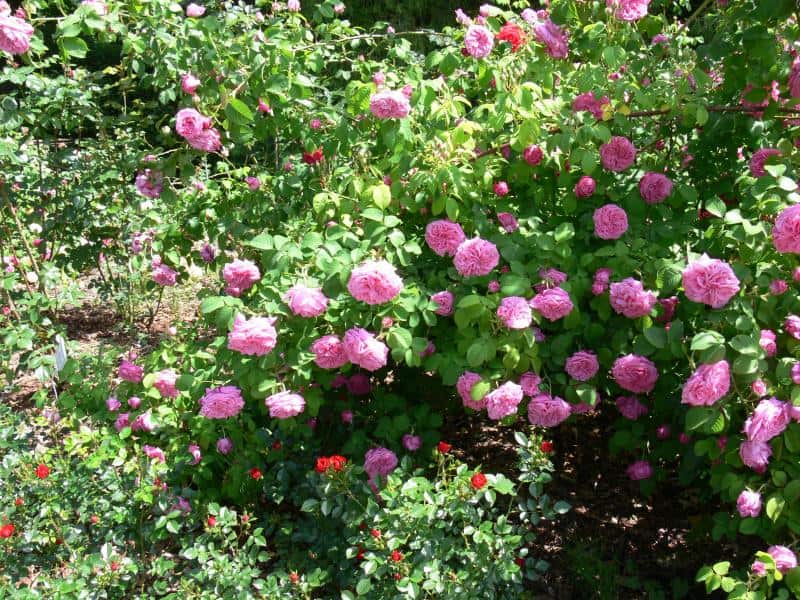
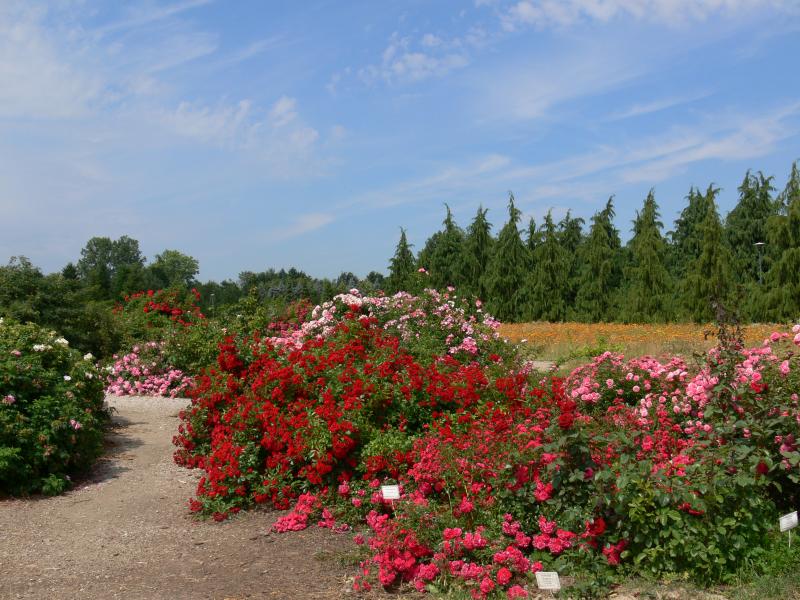
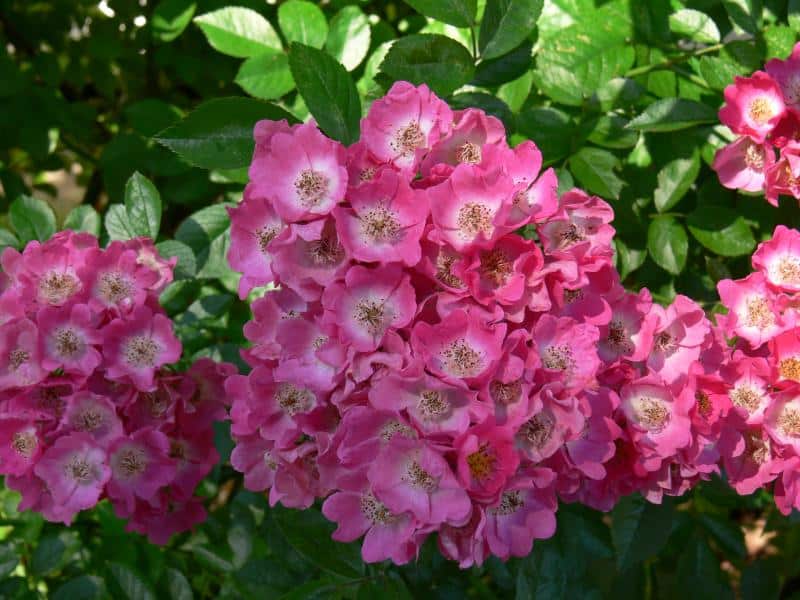
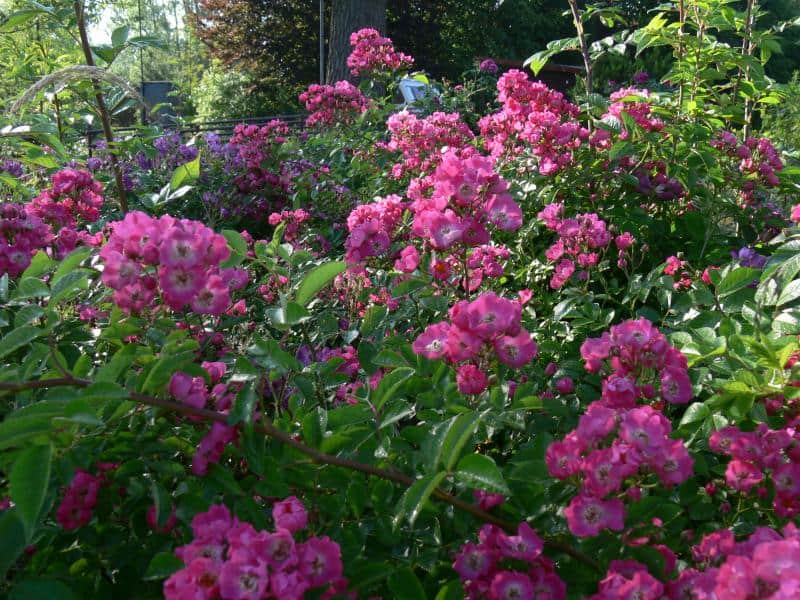
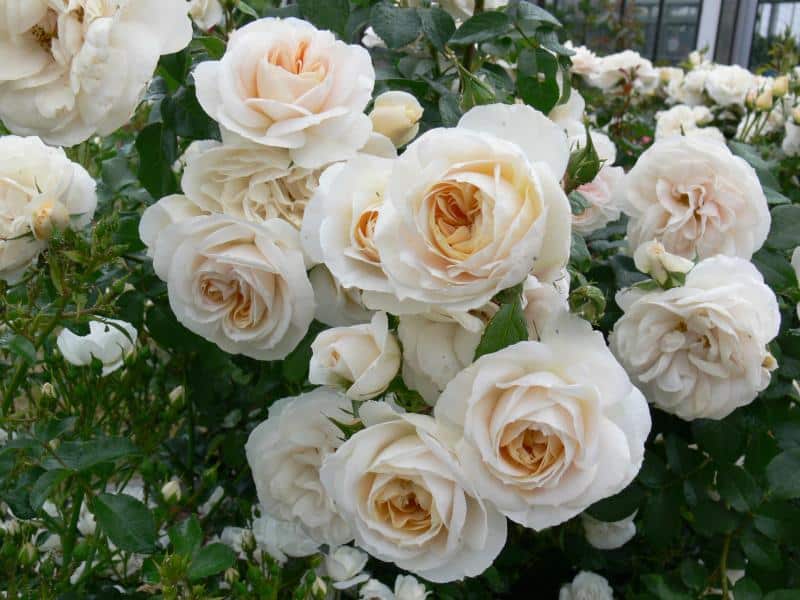
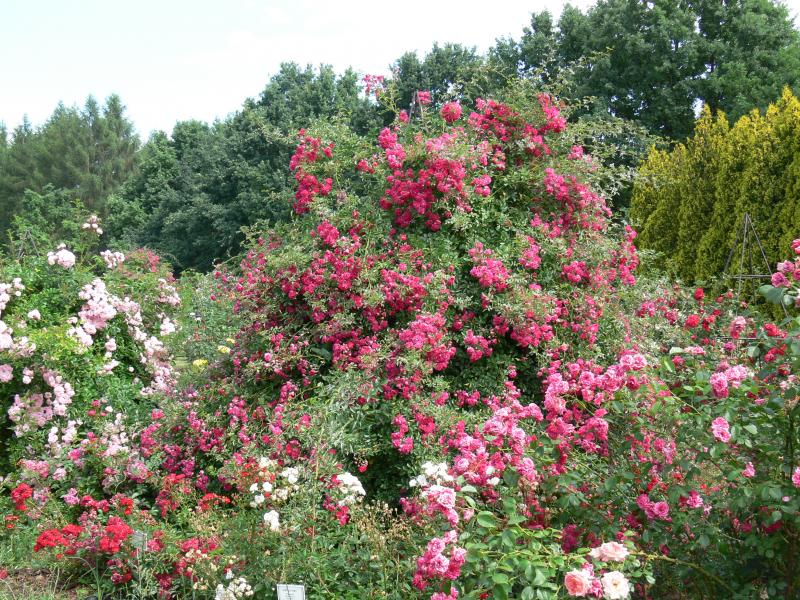
National Collection of Cultivated Varieties of Roses. includes several sections located in different areas of the Botanical Garden. The presented species and varieties show the diversity of cultivated roses, from those known thousands of years ago to the latest novelties of breeders from all over the world. The presented roses are representatives of all distinguished groups in terms of cultivation (park roses, climbing roses, large-flowered roses, bedding roses, groundcover roses, miniature roses) and almost all groups in terms of origin (Bourbon, remontant, Noisetta, tea hybrids, etc.). Also collected are those that were significant in the history of rose breeding and Polish breeding. The progress of breeding means that at least dozens of new varieties are introduced to the market every year. Shrubs, due to the great diversity of the genus, are planted in non-uniform combinations taking into account not only their origin and belonging to particular groups, but also color, flower shape, breeder, growth character and other features of importance mainly for later practical use. The collection is attractive from spring (shoots, spikes, first flowers from early May) to late autumn and early winter (fruits, shoots, spikes, discolored leaves, last flowers and buds).
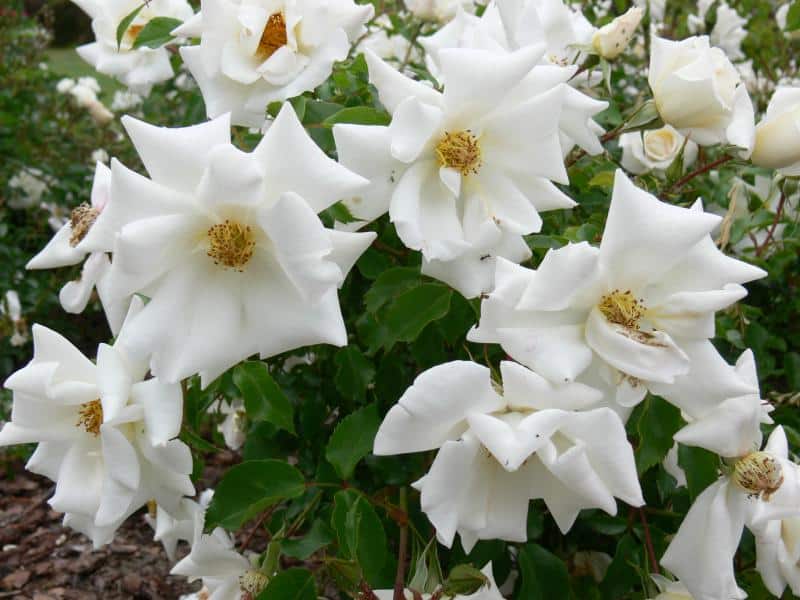
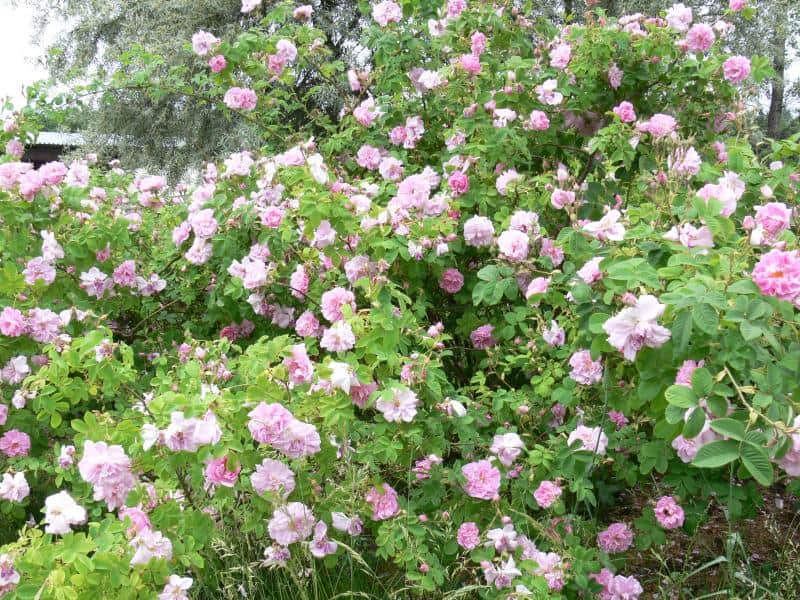
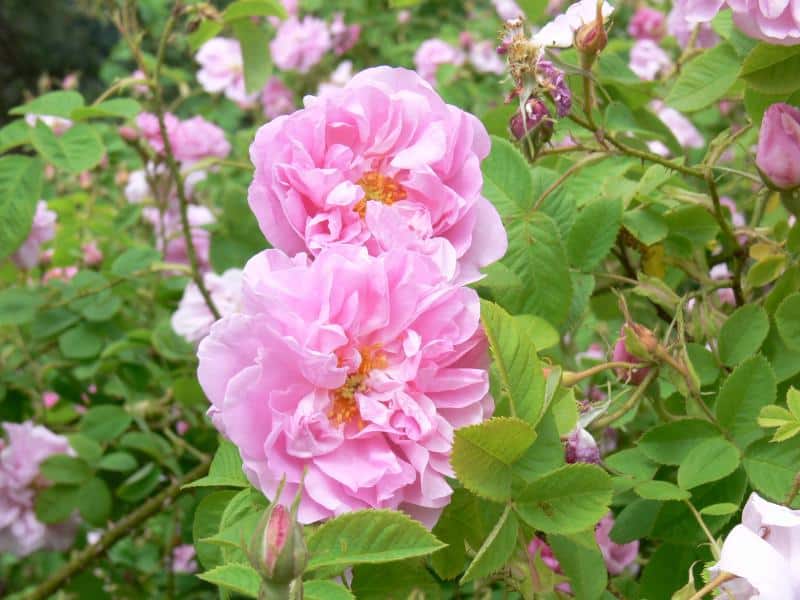
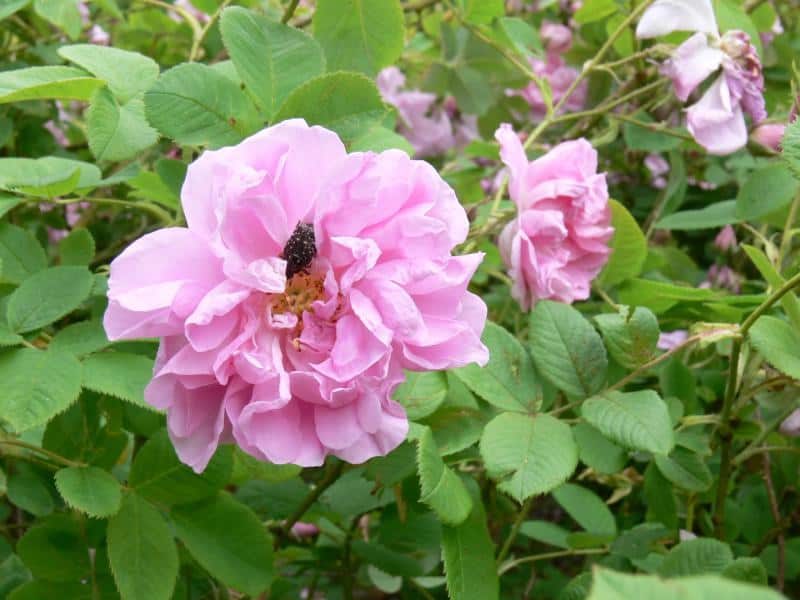
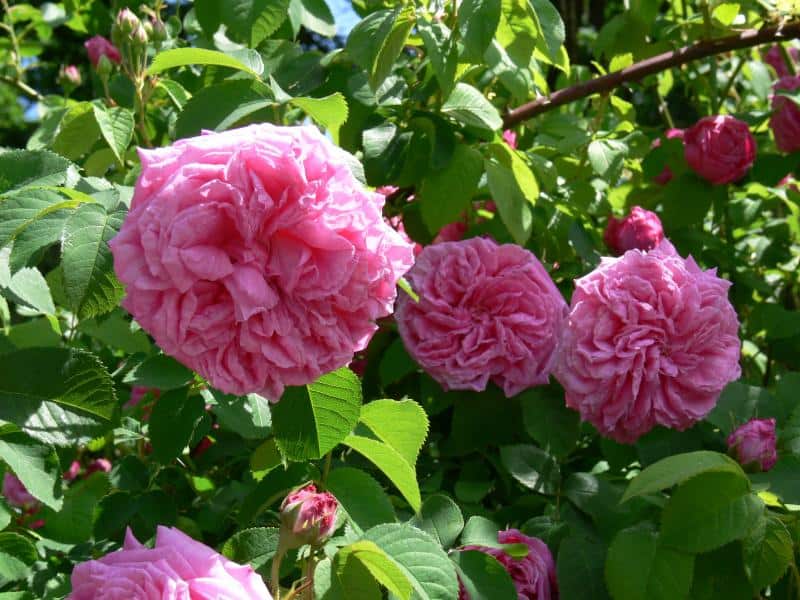
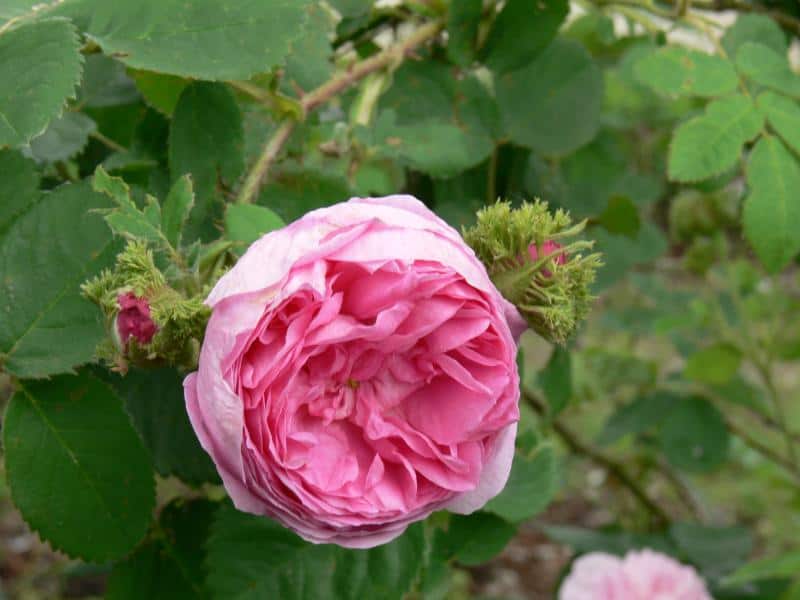
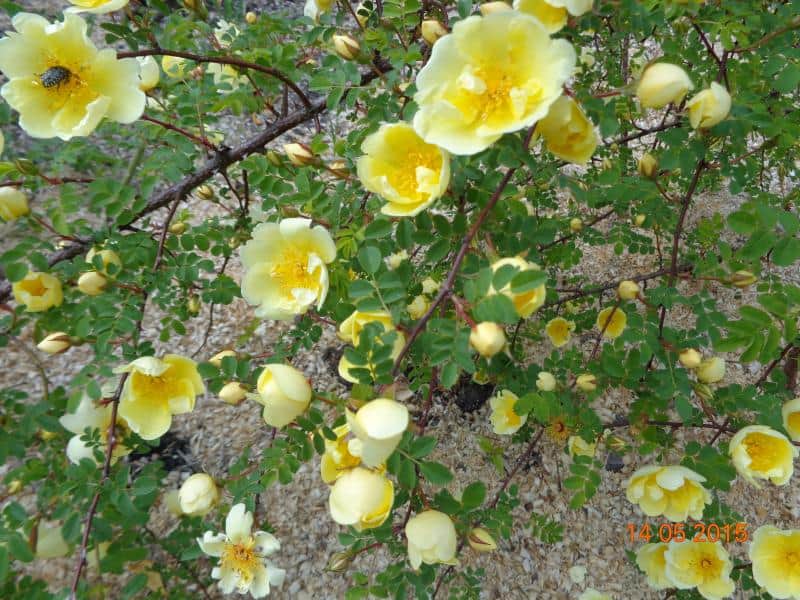
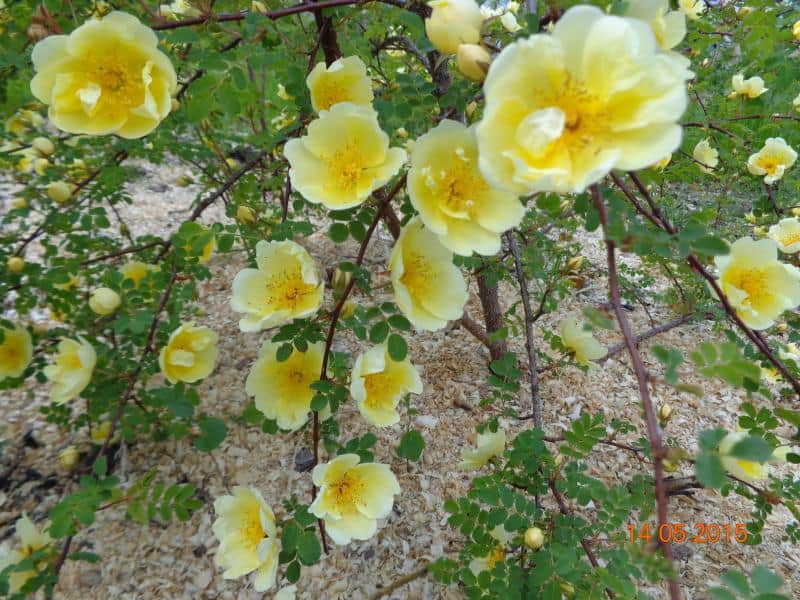
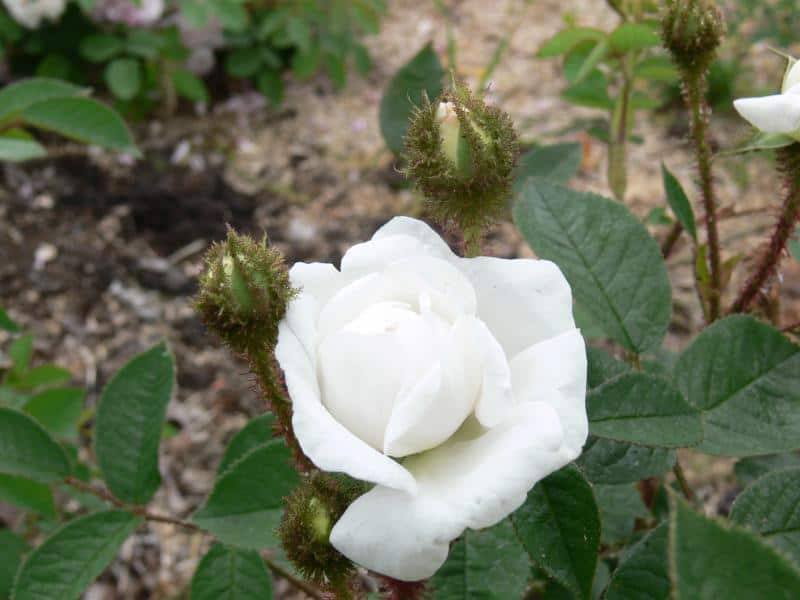
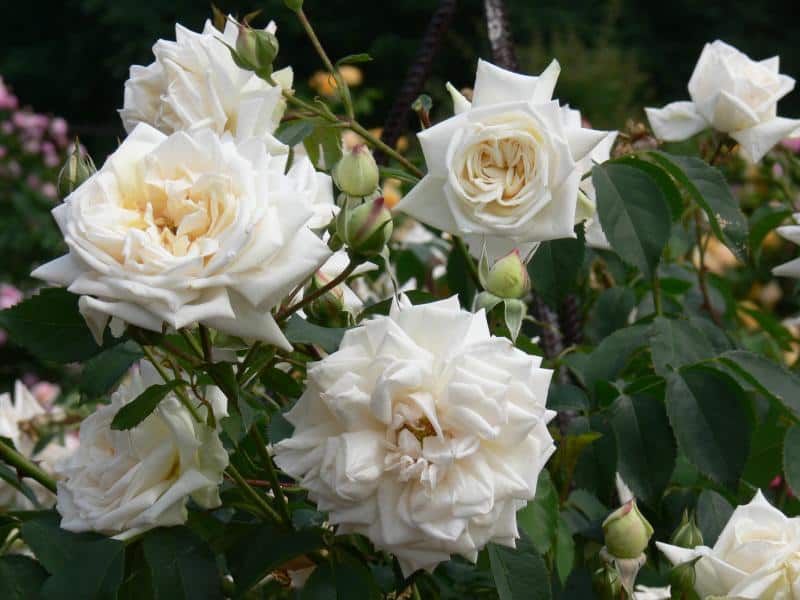
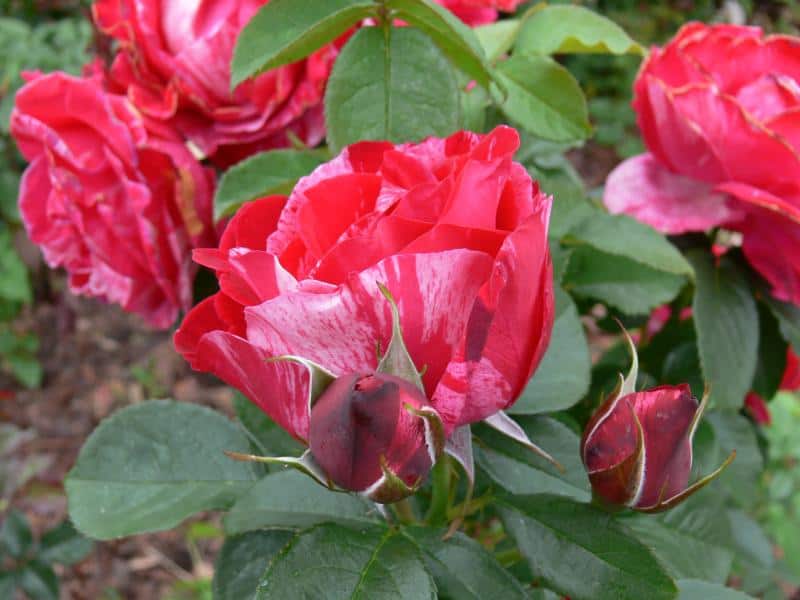
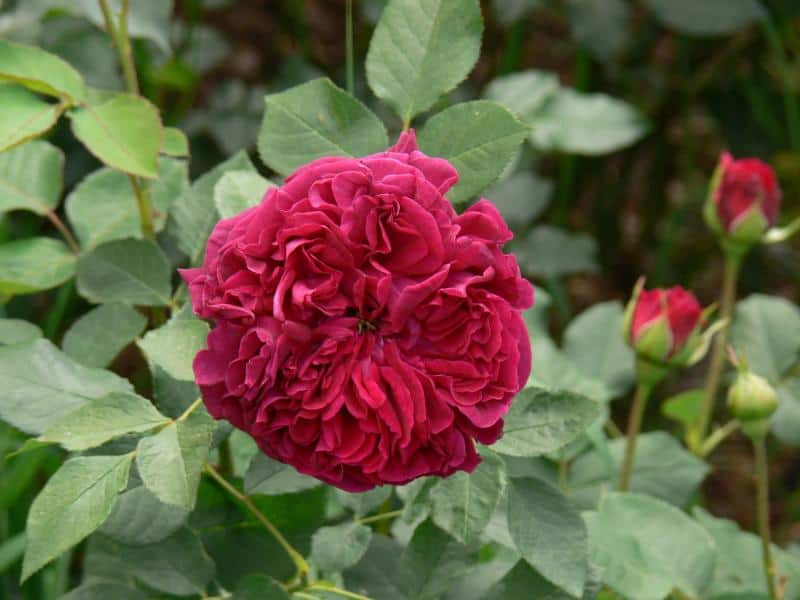
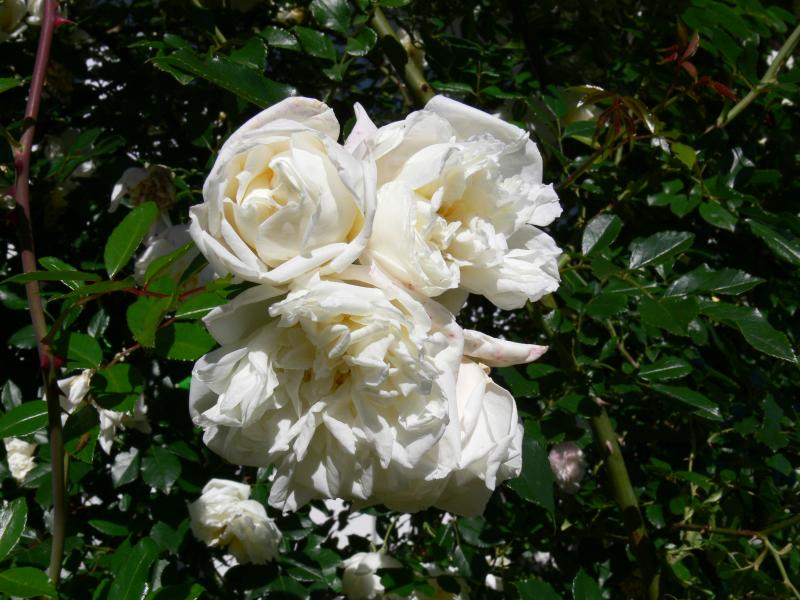
Historic roses are cultivated species and their varieties developed until the end of World War II. Today they are rarely found. They are an important part of the preservation of human cultural heritage and the biodiversity of cultivated varieties. The roses of our ancestors are notable primarily for their strong fragrance and special flower shape, rarely seen in modern varieties. Among them are damask roses, Portland roses, Bourbon roses, remontants and many others. These include: 'Shailer's White Moss' (1788) - a variety of moss roses (R. ×centifolia f. muscosa), with original mossy calyxes of snow-white flowers; R. foetida 'Persian Yellow' - one of the few oldest cultivated varieties with yellow, full flowers; R. ×alba 'Maiden's Blush' - with strong, delicate, sweet-scented pale pink flowers; R. gallica 'Cardinal de Richelieu' (1840) - with very dark, violet, full flowers, darkest at the time of its emergence. In addition, of interest are varieties of rose groups bred in the 19th and early 20th centuries, very rarely seen in cultivation today. These include, among others. Bourbon roses - 'Variegata di Bologna' (1909) with striped light pink and dark purple and 'Zéphirine Drouhin' (1868) climbing, with lilac-pink flowers; portland - 'Jacques Cartier' (1868) with numerous petal-filled flat, light pink flowers; remontants with very large, fragrant, shapely buds - 'Frau Karl Drushki' white and 'Victor Verdier' dark pink. Several varieties overwinter in the greenhouse, such as the Chinese rose - R. chinensis 'Viridiflora' (,,green rose'), 'Mutabilis' (with multicolored single flowers) and 'Old Blush' (forerunner of numerous repeat-blooming varieties, a model variety in scientific research).
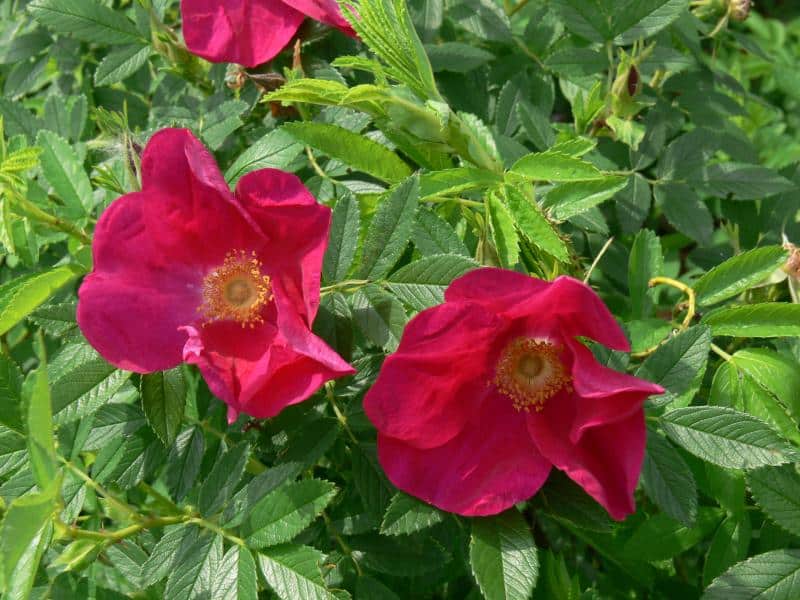
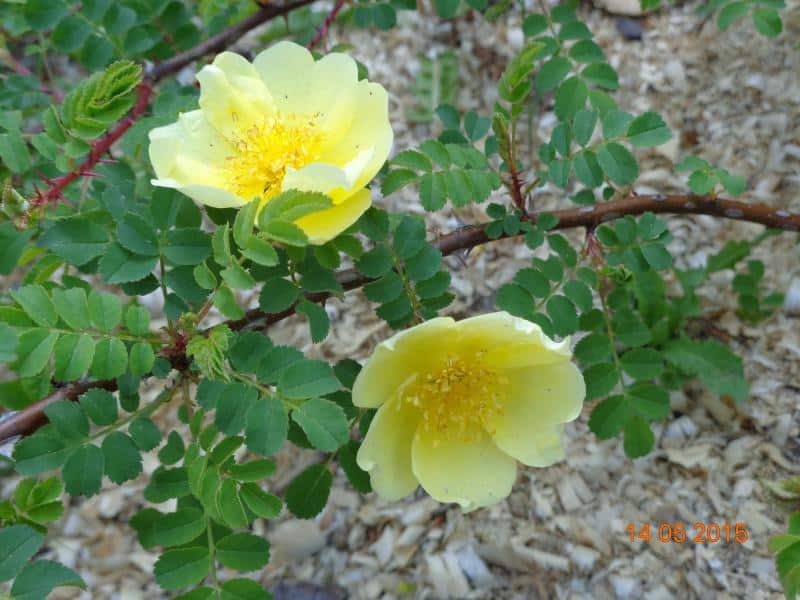
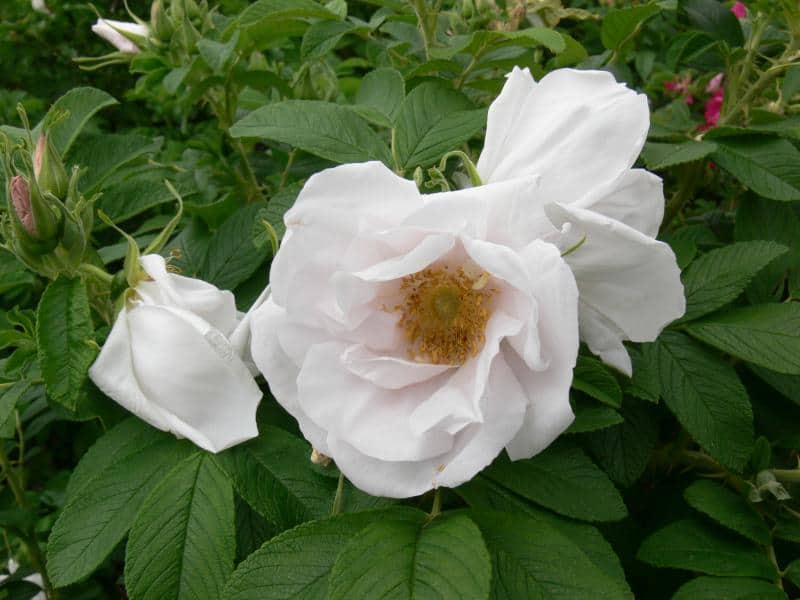
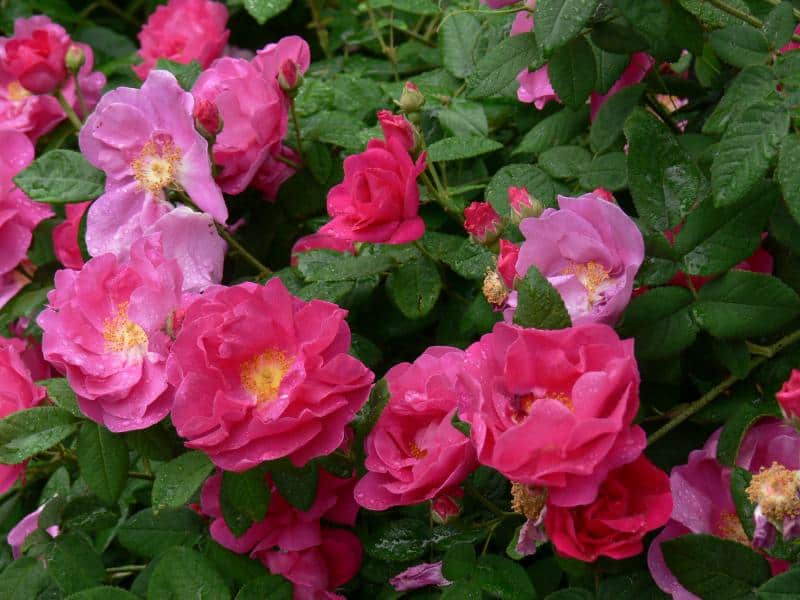
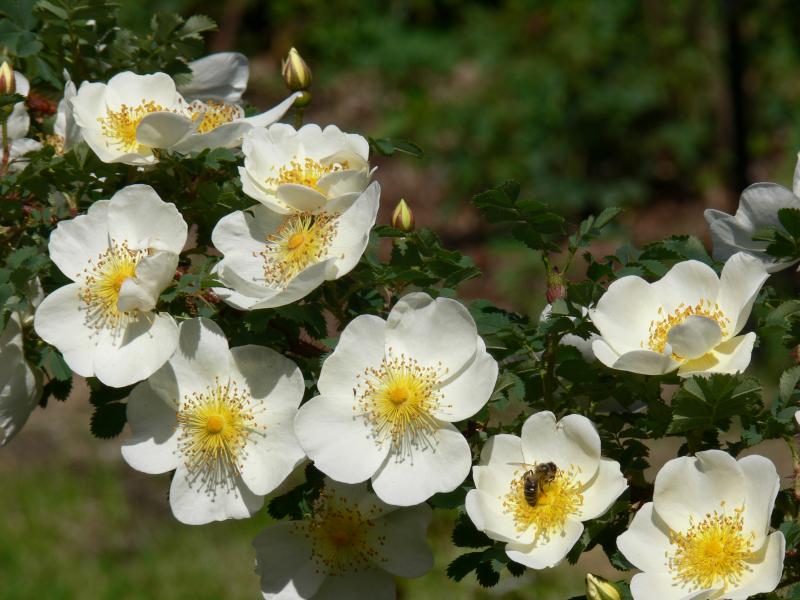
Park roses represent a diverse collection: species and their varieties, many historical roses, and varieties developed today. Their decoration is not only flowers, but also stems, thorns, fruits and leaves that colorfully discolor in autumn. So they are attractive not only during flowering. The first flowers in this group of roses appear already from the beginning of May, the last - before frost. Flowering is single or repeated. The collection includes varieties of R. glauca, R. beggeriana, R. foetida, R. rugosa, R. moyesii, R. spinosissima (R. pimpinellifolia), R. ×rugotida and others. Of note is Rosa sericea subsp. omeiensis f. pteracantha, a four-petaled rose which, as the name suggests, has four petal perianths, while other wild rose species have five. It often blooms as early as the end of April. Its main ornamentation is its huge, wide thorns, on young shoots bright red shining through in the sunlight. The Moyes rose (R. moyesii) 'Nevada' and 'Marguerite Hilling' with huge flowers are also outstanding, as well as varieties of the thick-spiked rose (R. spinosissima): 'Maigold', 'Frühlingsgold', 'Frühlingsmorgen', 'Frühlingsduft', 'Aïcha', 'Hispida' due to the extraordinary abundance of flowers appearing already in May and early June. All summer until late autumn bloom varieties derived from the wrinkled rose (R. rugosa) - 'Pierette', 'Hansa', 'F.J. Grootendorst' and others. In autumn, many park roses are decorated with multicolored fruits, colorful leaves, for example, Dutch rose (R. ×rugotida) 'Dart's Defender', 'Hurdal', 'Semiplena' and glossy rose (R. nitida) with red stems.
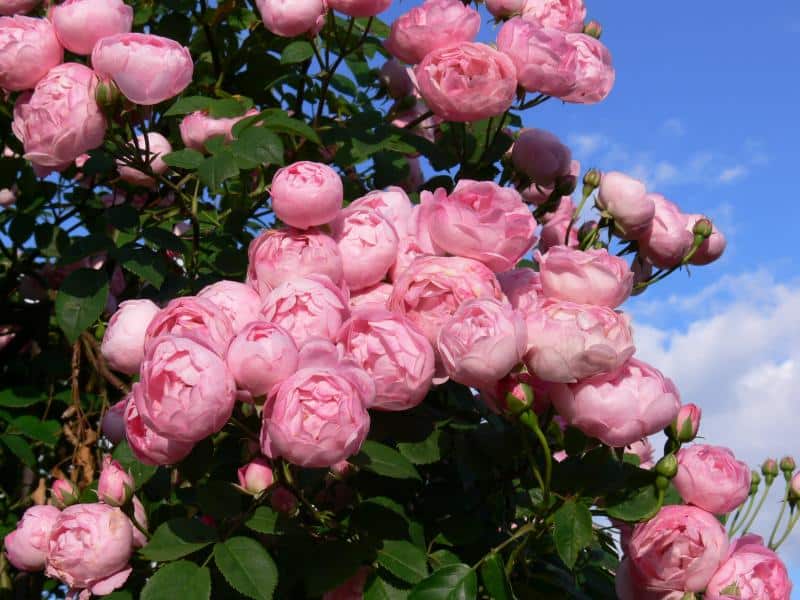
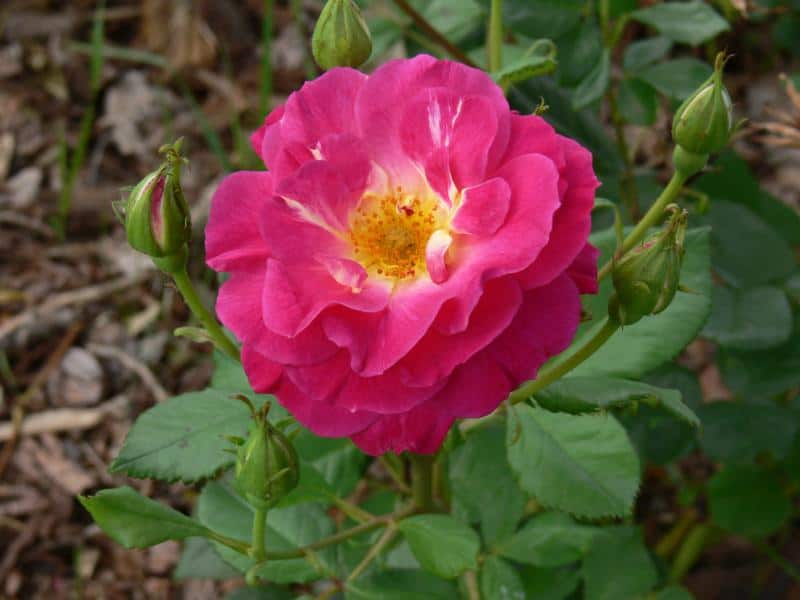
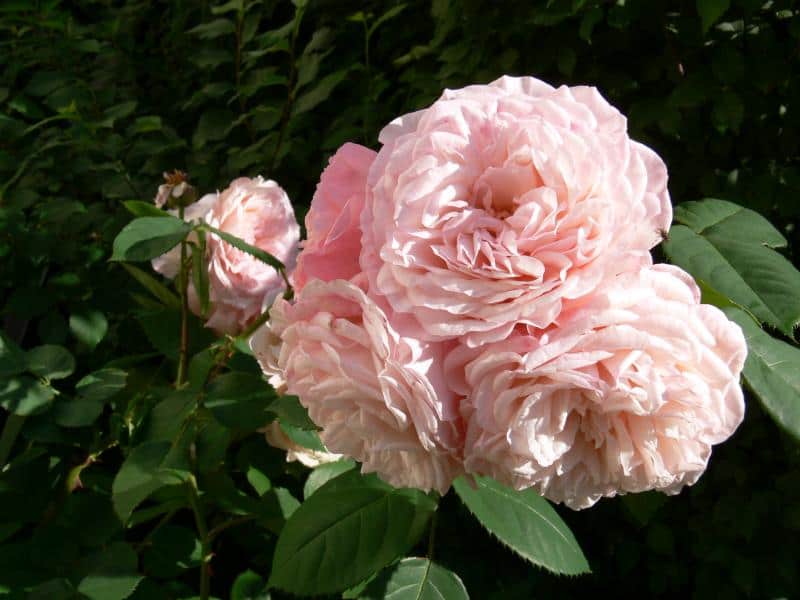
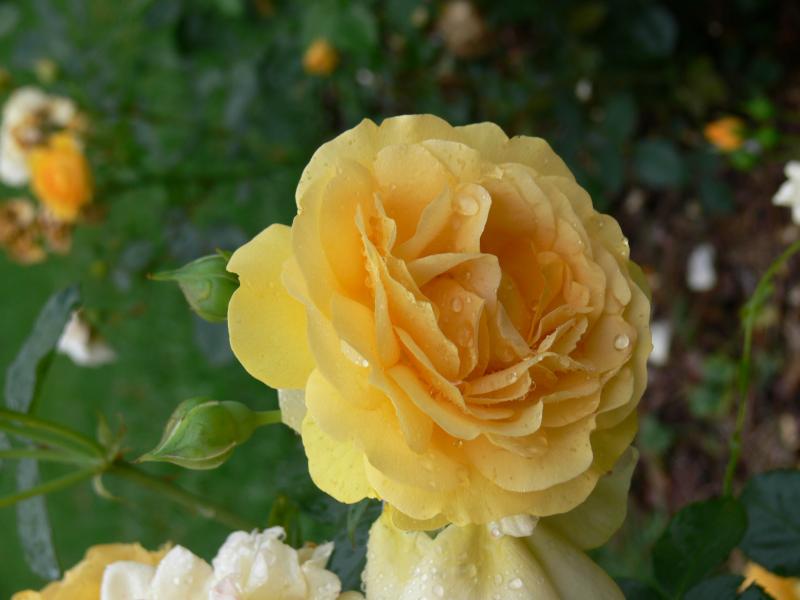
Valuable park roses are the English roses by David Austin (David Austin Roses Ltd, UK) developed in the 1970s, e.g. Graham thomas, Abraham darby, Heritage, Falstaff, Mary Rose. They are distinguished by the direction of breeding, aimed at combining the characteristics of old and modern roses. Fragrant flowers have the characteristic shape of the old roses for this in a wide range of colors, free habit, , "natural", while other features are similar to modern roses. Mostly they repeat flowering very well. In this group you can also find bedding and climbing varieties.
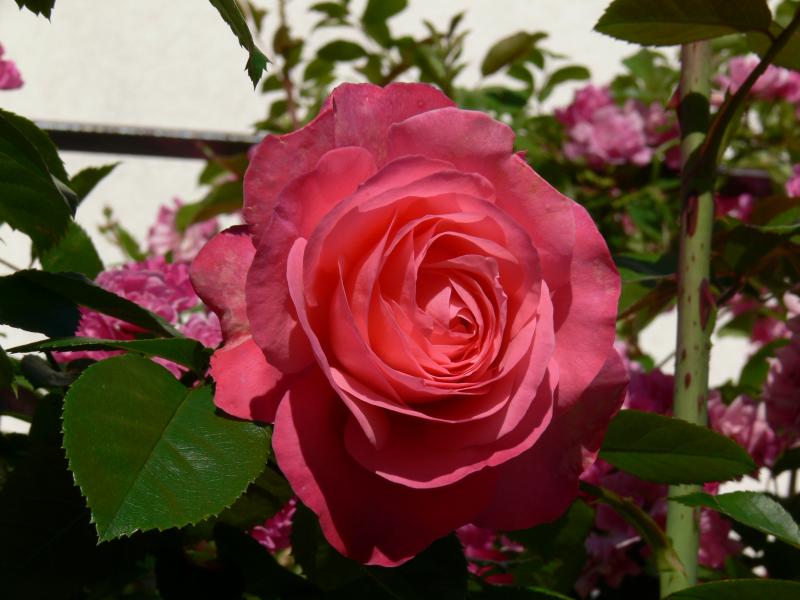
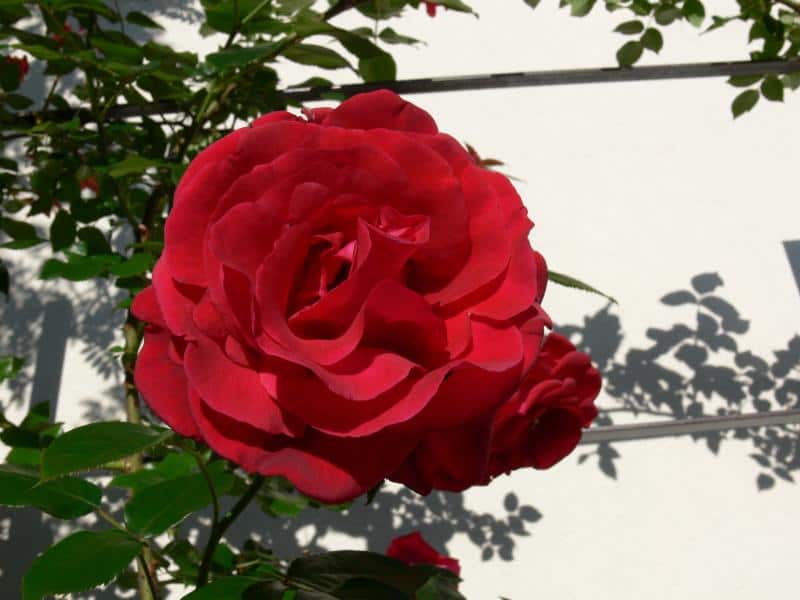
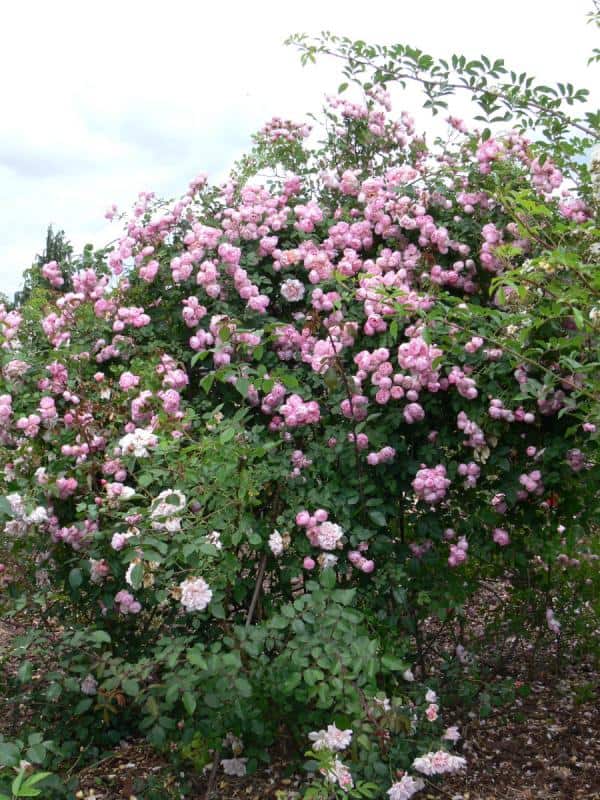
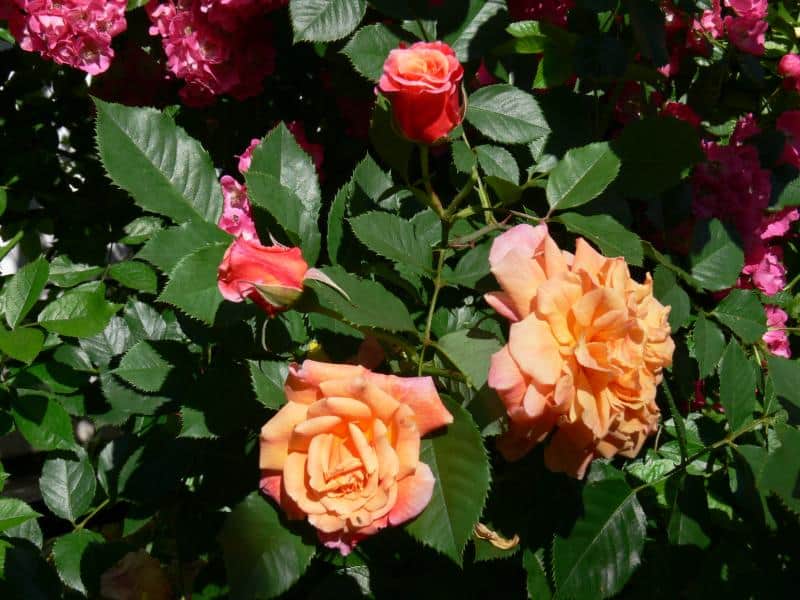
Clinging roses, botanically are primitive vines, without specialized clinging organs, , "clinging" to supports with thorns, present a crop of diverse origins. Older varieties can be divided into two groups - rambler and climber. Climbing roses climber, are mostly derived from Wichury rose (R. wichurana), Kordes rose (R. ×kordesii), sometimes they are sports of tea hybrids, while climbing roses rambler - mainly from multiflora rose (R. multiflora). Noteworthy is 'Veilchenblau' for its rare violet color of petals in a lovely heart shape. One of the older climbing varieties, at the same time with the darkest black-purple flowers is 'Guinée' (1938). Noteworthy is 'Ena Harkness clg', with very large scarlet flowers. The pale pink 'New Dawn' (1930) is the first climbing variety to repeat flowering and the first plant protected by a US patent. Many valuable climbing varieties carry its genes, e.g. 'Morning Dawn', 'Aloha', 'White Dawn', 'Coral Dawn', 'Schoolgirl'. Beautiful, fragrant, dark orange-pink, very full, quarter-set flowers have R. rubiginosa 'Alchymist'. Valuable varieties are the very abundant flowering and strong growing 'Kew Rambler' (1912) and 'American Pillar' (1902). Spherical flowers, full of charm, appear in R. macrantha 'Raubritter' (1936). The collection also grows newer varieties, e.g. Super Dorothy, Super Excelsa, Perennial Blue - ramblers that repeat flowering; Elfe - with celadon flowers; Schneewalzer - with huge white-cream, noble-shaped flowers; Uetersener Klosterrose - with full cream-pink flowers; reminiscent of old roses.
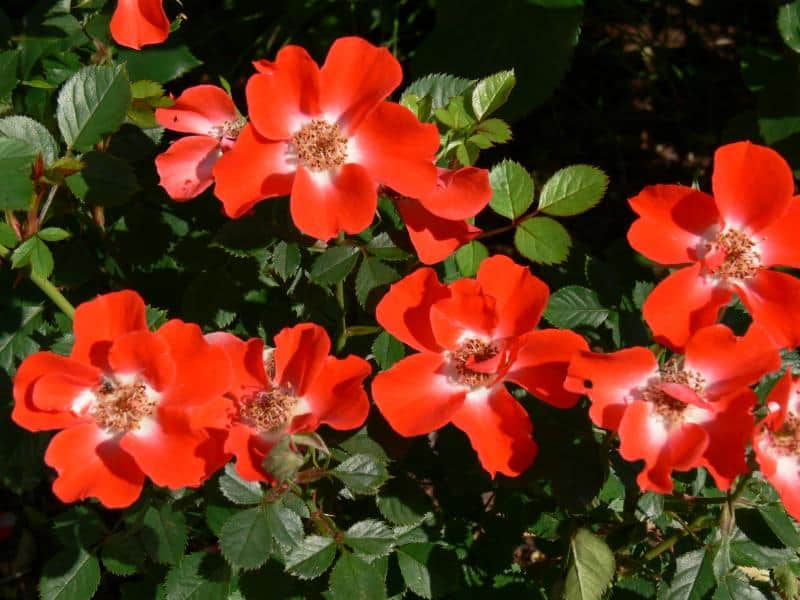
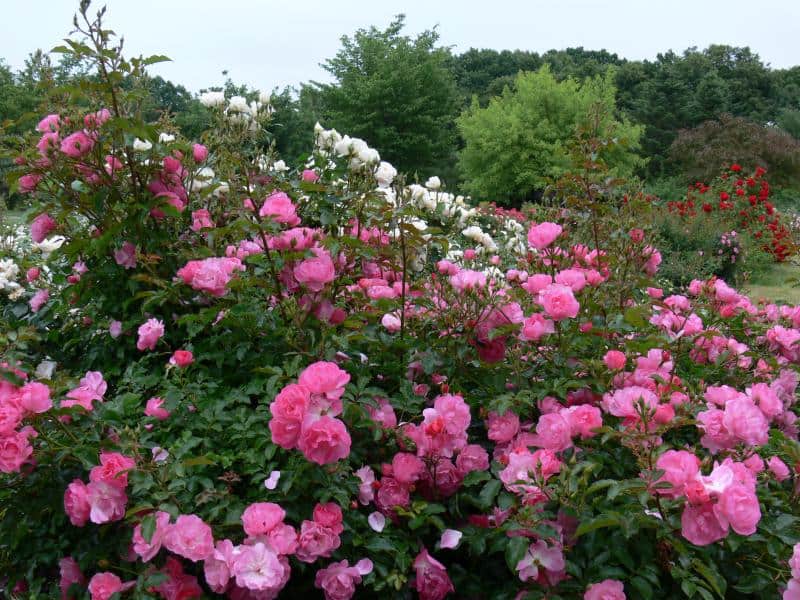
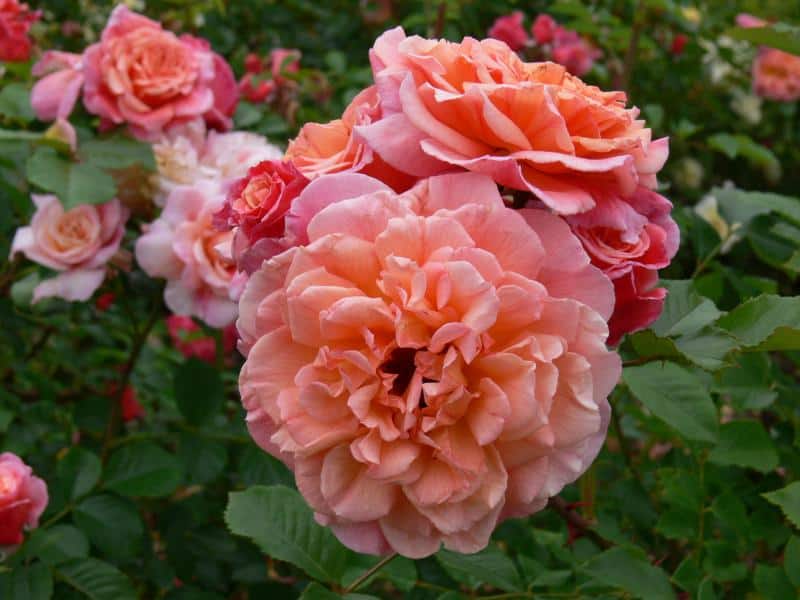
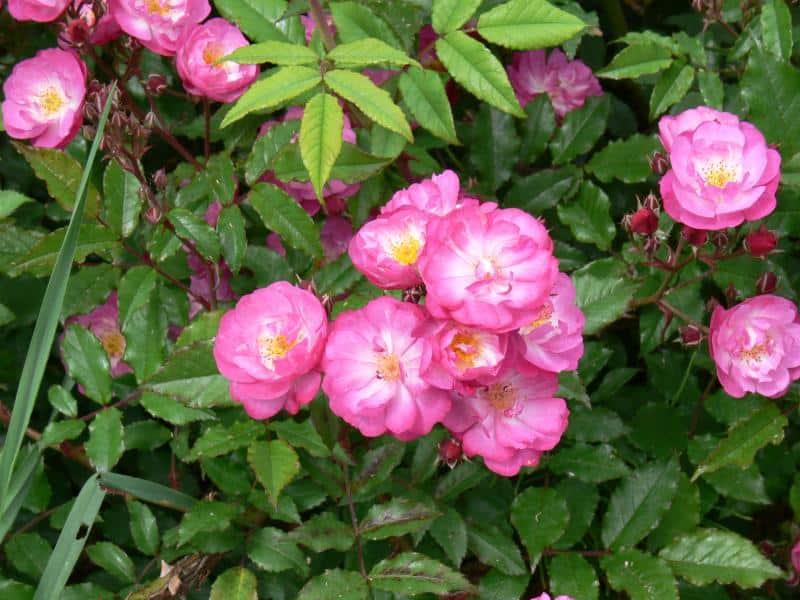
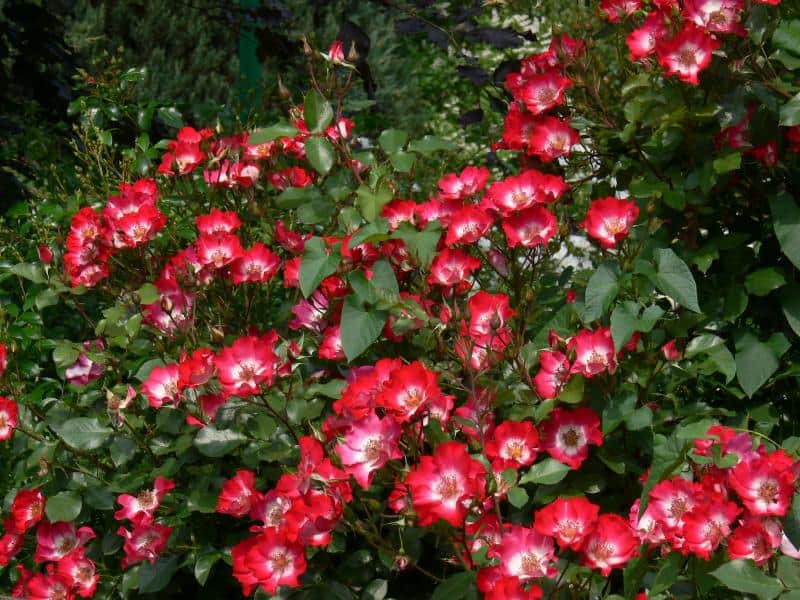
Discount roses present contemporary and older varieties that belong to four subgroups of multifloral roses (Polyantha), multifloral bedding hybrids (Polyantha Hybrida), bouquet roses (Floribunda) and large-flowered bouquet roses (Grandiflora). They are abundant and long-blooming shrubs, with greater resistance to disease and frost than large-flowered varieties. They delight with their rich colors and variety of flower forms - from snow-white Schneewitchen, through golden yellow Golden Holstein, Goldquelle, flesh-colored Schackenborg, peach Apricot Nectar, orange Amber Queen, pale pink Diadem and 'Bonica'82, coral Fredensborg, pink Bella Rosa, amaranth 'Joseph Guy', purple Deutsche Welle, mottled orange-yellow-red Samba and Rumba, to countless shades of red - Pussta, Montana, Nina Weibull, Lilli Marleen, Kronborg to red-black Lavaglut. Among them are Polish varieties, e.g. 'Camping', 'Kutno', 'Alicja'. Grateful, tiny flowers in huge inflorescences of several dozen flowers have Polyantha roses, e.g. pink 'The Fairy' and 'Lovely Fairy' and bright red, ball-shaped - 'Muttertag'. There are many new varieties growing in the collection with pastel or other amazing flower colors, easier to care for and more disease resistant, e.g. Anisade, Briosa, Leonardo da Vinci, Balmoral, Amazing Palace, Rhapsody in Blue, Cinco de Mayo, Pastella.
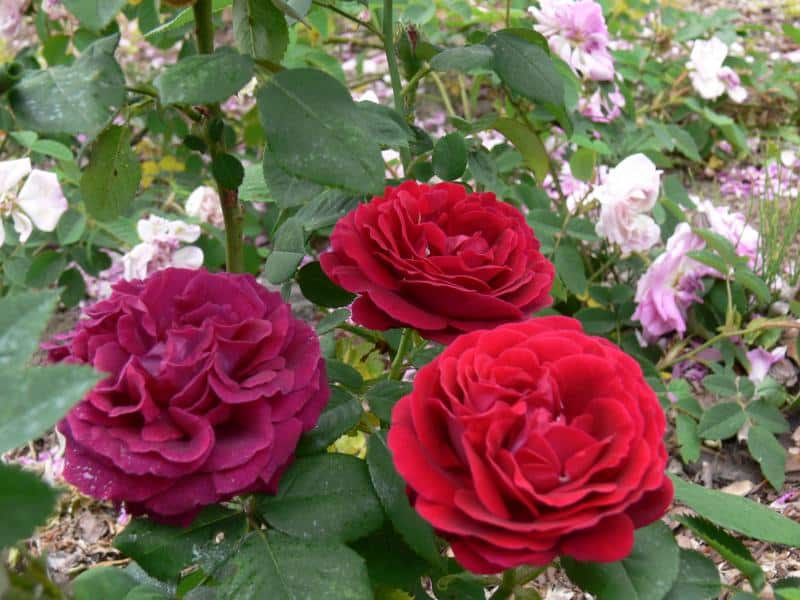
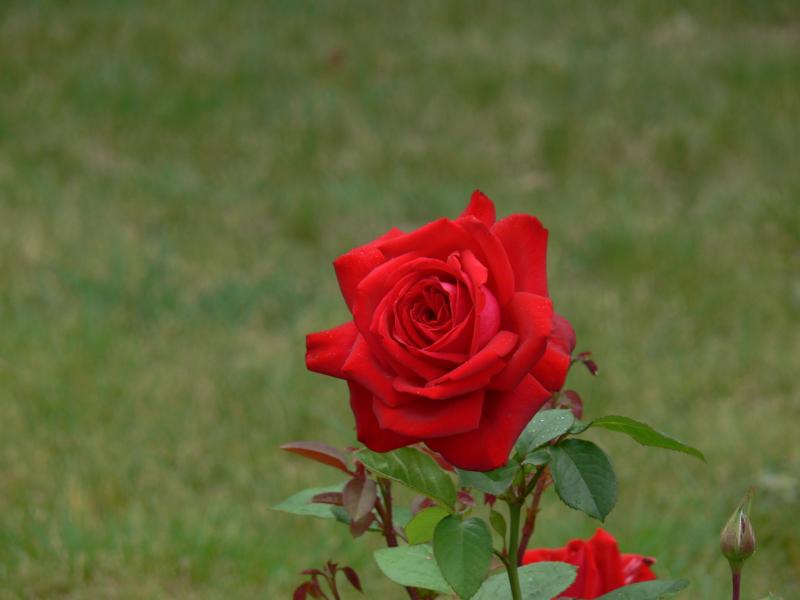
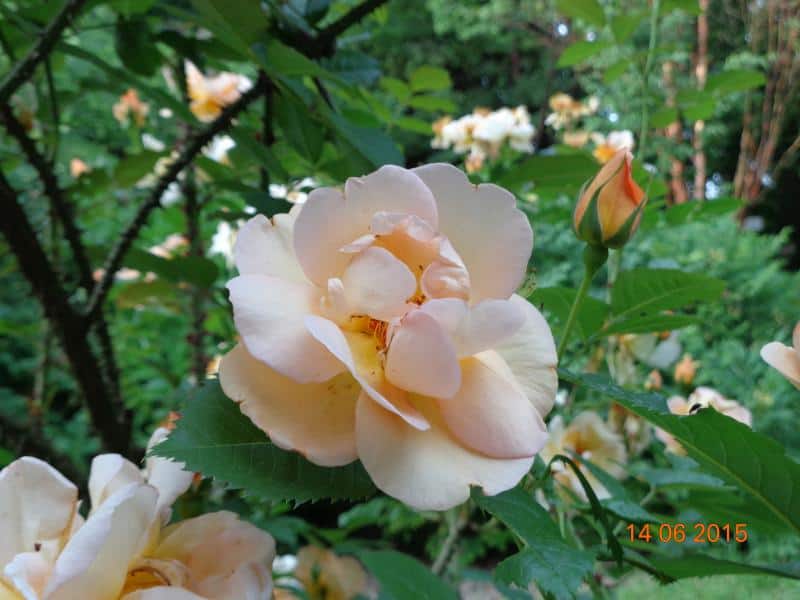
Large-flowered roses include tea roses (Tea), remontant roses (Hybrid Perpetual) and the most numerous group of hybrid tea roses (Hybrid Tea) - in a wide range of colors and different shapes of flowers, buds, often fragrant. They present different shapes and in a wide range of flower colors, bud structure, pleasant fragrances. Here you will find varieties bred decades ago, tried and appreciated, as well as novelties. Among them are the so-called blue varieties, in fact, rather with a shade of violet-volatile, e.g. the delicate Mainzer Fastnacht; the so-called black varieties, that is, with a shade of very dark red, e.g. the strongly fragrant Papa Meilland, 'Erotika'; with almost completely black buds: Burgundy, Barkarole, Schwarze Madonna. Interesting in color are the multicolored flowers of the no longer young varieties 'Die Welt' or 'Peace', valued in cultivation for their vitality, as well as newer varieties: Neue Revue, Harry Wheatcroft, Cleopatra, Granada. It is worth noting the Polish variety 'Chopin', with fragrant, large, creamy flowers, and varieties in pure orange - a breeding success in the last 20 years - Flora Danica and Polish 'Navoika'. There is also no shortage of newer varieties, e.g. Parole with flowers measuring 13 cm in diameter, Blue River - purple, Chippendale - orange, Glowing - lemon-silver.
Miniature roses of older origin have small flowers of noble shape and small leaves, referring to historical Chinese roses and large-flowered roses. Varieties bred in recent decades present a great variety of flower forms and colors, different habit and growth strength. Blooming red with small flowers of noble shape, Baby Baccara stands out for its tall growth. Interesting, carnival-like mottled colors have the flowers of Baby Masquerade, Colibri'79; orange - Clementine, purple Bluenette.
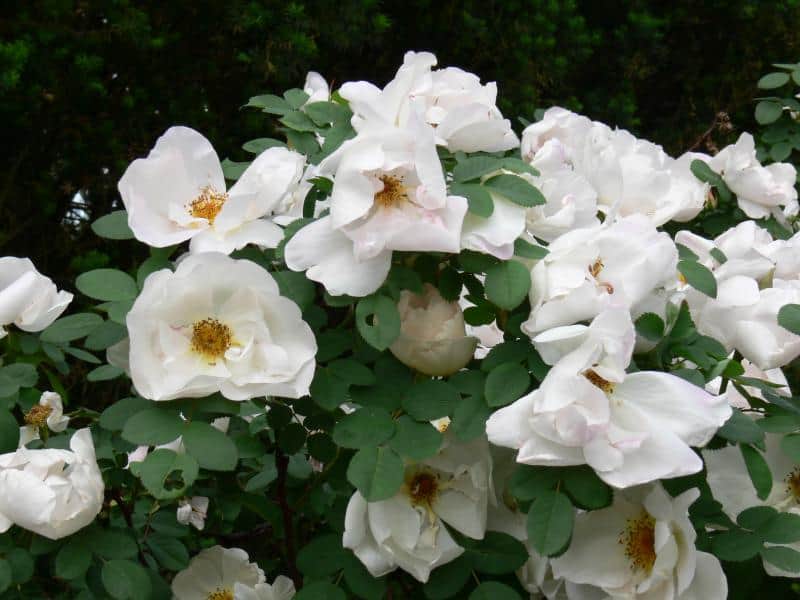
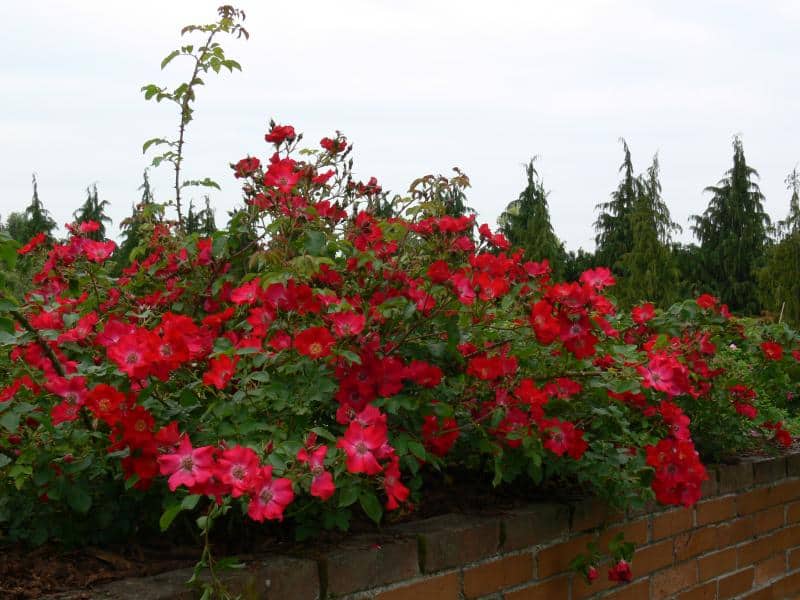
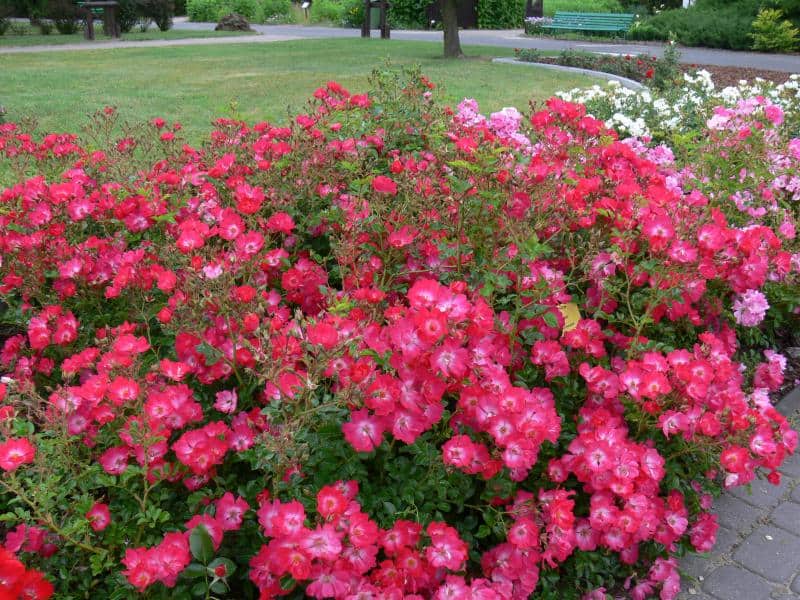
An important part of the collection is a collection of ground-cover roses, intended for areas with extensive growing conditions and for so-called difficult areas. They were separated as a group only in the 1970s, for which new uses were found. This group includes varieties already known and existing, as well as new ones bred specifically for this purpose. Many rose species also belong here. Nowadays, some of them are part of a new trend in breeding and, more recently, a new group in terms of use - landscape roses (Landscape Roses). They are characterized by abundant, long flowering, high resistance to frost, heat, disease and pests, and do not require much maintenance. Most of them bloom from June until frost. There are, among others, varieties bred in Meilland's nurseries, e.g. white Alba Meidiland, pink Bingo Meidiland; W. Kordes' Söhne, e.g. pink-red Tommelise, red Mainaufeuer; Noack's, e.g. pink Heidetraum; Poulsen Ap/S Roses - Towne & Country varieties. There are also many varieties here derived from species e.g. R. rugosa - intended for urban conditions Pavement®, R. ×mariae-graebnerae 'Rote Hannover', R. spinosissima 'Repens'.
Author of text and photos Marta Monder

 English
  Polish